Wednesday, 23 March 2011

dissertation proposal part 2

Title (max 50 words)

How have regenerated cities successfully used a cultural/exhibition/civic/arts centre to give a sense of culture and community? How can this be applied to the V&A in Dundee?

Summary (max 1000 words)

Community and culture are both very important factors of a cities identity. These features bring new industries, businesses and people to a city therefore causing growth and development. In the past the community was seen as being a group of people who worked or lived together; a neighbourhood. In recent years the idea of a community has changed and has often become a form of segregation between ethnic groups and class. For this to change and for community identification to come back to being a group of people from different classes, ethnicities and identities something must be done. With the arts being a cultural industry involving fashion, music, graphics, dance etc this can be used to bring different groups of people together and social transformation would be seen.

Exhibition Centres are created to serve more than the purpose of exhibition and so should act to bring different aspects of a community together. They should provide job opportunities, education benefits, improve the environment and provide a sense of community and so giving a social benefit. A cultural centre is different from an exhibition centre in that a cultural centre can involve exhibition, museum, arts and civic space; all features contributing to renewing citizenship and improving the local image. Bringing different forms of arts together is an important factor to consider when socially and physically regenerating a city.

With the V&A Museum coming to Dundee I am interested into how they plan to involve all of the community in this cultural centre. Museums and Exhibition centres have more than the purpose to exhibit but also to create a community and give the community a sense of culture. I have visited the exhibition of the proposed designs for the V&A in Dundee taking into account the questionnaire which asked what other services the public feel should be provided in the museum. The winning designer, Kengo Kuma explains that his aim is “to contribute meaningfully to the cultural richness of the city." It was noticed that his design had a main public seating and meeting space at the centre, thus creating a space for community interaction. In Kylie Message’s lecture she described museums to be “cultural – culture for all.” How has this been accomplished in other cities and how does Dundee plan to achieve this?

Looking at other cities that have undergone regeneration it is clear to see that one of their main focuses is to give the city a new sense of identity. These are often previous industrial cities in which the industry is no more or is fading away, and so the city has lost this identity. With Dundee previously being a city built on the Jute industry it can take lessons from other industrial cities for example, Sheffield and Liverpool. The process of regeneration can give the cities a new lease of life, bring new industries into the city and therefore create new jobs, improve the economy and give the community a new sense of culture. This new cultural identity can involve the past history of the city while including the new industries, businesses and culture. It is important to include the history of the city in the new design as this was and is part of the story and identity of the city.

When a city is being regenerated should a cultural centre be the main focus? What cities have used this regeneration master plan successfully? How has this been achieved? Other examples of cities within the UK that have been regenerated include Liverpool and Sheffield, both of which have a main culture and arts centre/museum. Liverpool used three different strategies to transform and regenerate the city. Liverpool Vision; for the business and economic development, The Mersey Partnership; to attract new tourism and investment to the city, and Liverpool First; to create a long term plan to create and maintain a sustainable community and create a thriving international city.

Sheffield has the Creativesheffield development company which has 5 main activities to ensure the transformation of the city; investment, marketing, regeneration, innovation and business support services. The Millennium Gallery in Sheffield and the Albert Dock in Liverpool are known as the cultural hubs of each respective city. Have these plans been successful in achieving a sense of culture for the community? What can Dundee take from these to ensure the same happens in this City?

Regeneration within a city can have impacts on the social aspects of the city. This includes the economy, education and community etc. This can be both positive and negative, therefore it is important to ensure that the planners and developers recognise this and take these social aspects into consideration. The regeneration will obviously impact on the future of the city, which will continually be changing. This must be considered when planning the development of a city. Future problems cannot always be predicted but it is important to try and maintain a cultural community to ensure the city is diverse and therefore open to expansion and growth.

There are many different forms of public centres for example, civic, arts, cultural, museums, exhibition etc. What are the main features of these that ensure that they are used by all members of the public and community? How can they be used to draw viewers in who wouldn’t normally consider going into a museum or exhibition? It is important to understand the people that a building is being designed for; this can be the wider public or a specific age group, gender, social group, ethnic group etc. These are all factors that affect the culture of a city and so should therefore be considered when designing a public building.


Aims: Why are you doing this? (max 100 words)

I am interested in culture, people and how their city affects their identity and sense of community. Knowledge can be learned for future regeneration from the past experience of other regenerated cities.

This idea of an exhibition centre or museum having more than one purpose is something that I would like to investigate further for future reference in practice. I would like to see how these centres are used as an effective tool in creating a community and society.

I would like to explore how the public of Dundee feel about the regeneration of the city along with the introduction of the V&A. This can help to ensure the purpose and function of the V&A is fulfilled.

I hope that this dissertation can act as a tool to help plan the regeneration of cities through learning from the experience of previously regenerated cities.


Objectives: What will you produce? (max 100 words)

What are the public’s thoughts on the V&A coming to Dundee? Will it create a sense of community? How so? What do they expect from it?

I will research other cities that have been regenerated to see how they have successfully used a cultural centre to give a new sense of community and identity to the city. This can be used to learn from their experience.

I hope to create a plan to help the V&A Museum in Dundee ensure that it involves all members of the public while creating a community and cultural hub using examples from other cities.

I hope to create an article that the members of the public can read to gain an understanding in how they can be involved in this process.


Keywords (min 5 and max 10)

Cultural Centers

Public

Community

Exhibition

Civic Centers

Urban Regeneration

Urban Renewal

V&A Dundee


Expanded Bibliography (min of 24 books, articles, websites)

References Part 1

Black, G, (2005), The Engaging Museum: Developing Museums for Visitor Involvement (Heritage: Care-Preservation-Management), London: Routledge.

This very practical book guides museums on how to create the highest quality experience possible for their visitors. Creating an environment that supports visitor engagement with collections, means examining every stage of the visit, from the initial impetus to go to a particular institution, to front-of-house management, interpretive approach and qualitative analysis afterwards.

Florida, R, (2005), Cities and the creative class, New York ; London, : Routledge.

Richard Florida outlines how certain cities succeed in attracting members of the 'creative class.’ He looks at the forces reshaping our economy and how companies, communities and people can survive and prosper in uncertain times. Florida describes a society in which the creative ethos is increasingly dominant. Millions of us are beginning to work and live much as creative types like artists and scientists always have. Our values and tastes, our personal relationships, our choices of where to live, and even our sense and use of time are changing.

Jones,P. & Evans,J. (2008), Urban regeneration in the UK, London: Sage Publications.

This book is about the factors of Urban Regeneration. It has been broken down into chapters on Governance, The Competitive City, Sustainability, Design and Cultural Regeneration and Regeneration beyond the City Centre. It has been described as a useful handbook for students, breaking down the aspects of regeneration into a manageable form.

Lehmann, S. (2009), Back to the city : strategies for informal urban interventions. Collaboration between artists and architects, Ostfildern : Hatje Cantz.

Explains how arts have been brought back into the public spaces and roadways within a city and the impact this has had.

Message, K. (2006), New museums and the making of culture, Oxford: Berg.

Message describes how museums are now reinventing themselves to be much more than an educational place but one that can reach the broader public, giving them a sense of pride and public purpose. She uses examples of different museums throughout the world that have used their museum to create a public culture.

Newhouse, V, (1998), Towards a new museum, Monacelli Press.

Divided into various themes covering the relationships between museums and collectors, trustees, artists, and the public. This book takes a critical look at innovative architecture that interacts with art and the public in new ways. How the viewer reacts with the site, the building, and the art.

Prior, N. (2002), Museums and modernity : art galleries and the making of modern culture, Oxford : Berg.

This is a history of museums and galleries in the past and how they have been rejuvenated. It looks at the relationship between art galleries and the audiences, exploring the interrelationship between the artistic forms and how this gives roots to a modern culture. He investigates how the boundaries of art and culture have been determined by the museum world.

Journals

Fairmount Park Art Association, edited by Penny Balkin Bach, (2001), New land marks :public art, community, and the meaning of place [published on the occasion of the exhibition held at the Pennsylvania Academy of the Fine Arts, Philadelphia, 10 February - 15 April 2001]; Washington, D.C. : Editions Ariel

Websites

http://www.creativeclass.com/

http://www.demos.co.uk/

http://www.dundeecity.gov.uk/

http://vandaatdundee.com/your-future/

References Part 2

Adam, C, (1999), Masterplan for urban regeneration : civic arts and culture centre, Dunfermline. Thesis (B.Arch.) - University of Dundee.

This thesis looks into the urban analysis of the area, recognising the existing architecture and public buildings therefore seeing the need for a new public centre. The importance of a masterplan is explained and explored to ensure the positioning of the centre is appropriate. Adam looks at other examples of arts centres throughout the world to gain knowledge and experience from.

Blake Stevenson Limited, (2000) Role of the arts in regeneration. Edinburgh : Central Research Unit.

This Article is written by the Scottish Arts Council looking into the role of Arts in the community. How to involve the community; listening to and working with when designing a new arts centre. Through research they explain the importance of giving the public a sense of ownership.

Jacobo, K. (2009) Urban spaces : environments for the future, Links : Barcelona

This is an investigation and examples of public spaces as outdoor, urban places. Looking into the importance of having a communal area for public use. The idea of how this gives the community a sense of identity and can be used to give the city personality and a culture.

Jodidio, P (2010) Architecture now! : museums = Architektur heute! Museen = L’architecture d’aujourd’hui! Musées, Taschen : Cologne.

Architecture Now! is a collection of public buildings from around the world. There is a synopsis of each buildings main function and some history of the designer. This book can be used as a reference to find public buildings that can be further researched.

Landry, C, (1996) The art of regeneration : urban renewal through cultural activity. Comedia.

Landry looks into the benefits of renewing citizenship and how this improves local image. They look at the importance of viewing the current local strengths and how these can be built on to make a town successful. There are examples of post industrial cities that have been turned around through physical and social regeneration. There is research of the success of arts and creativity being at the centre of this process.

Locker, P (2010), Exhibition Design, AVA Academia: Lausanne

Locker investigates and explains the main purposes of exhibition design; the aims and objectives, designing a narrative etc. She explains how to design for a particular audience and therefore involving the public. She looks into the importance of knowing who you are designing for – the people.

McNally, C, (1996), Strabane civic and cultural centre, Thesis (B.Arch.) - University of Dundee.

This is a thesis on the regeneration of Strabane (N.Ireland). As an architecture student, McNally has proposed a design for a new Civic and Cultural Centre. Through doing his design he explains the process, looking into what the centre should include, how to involve the public, the different functions it should have etc. He also looks at examples of previous regeneration projects throughout Europe.

Journals

Garcaa , B, (2004), Cultural policy and urban regeneration in Western European cities: lessons from experience, prospects for the future. Local Economy, Volume 19, Issue 4, pages 312 – 326

This explores the experience of cities considered to have succeeded in re-imaging and regenerating themselves through cultural activity and special events. It gives recommendations for further development within the UK context.

Smith, M. K,(2006, Tourism, culture and regeneration. CABI Publishing.

Smith looks at cities that have suffered from industrial or tourist decline, focusing on how this can be revamped and renewed. He looks to the significant role of tourism in culture and how this can achieve sustainable and integrated regeneration. He describes how the concept of regeneration can be applied to a variety of areas within a city, not just creating new buildings.

Wansborough, M & Mageean, A, (2000), The Role of Urban Design in Cultural Regeneration. Journal of Urban Design, Volume 5, Issue 2.

This looks at the link between cultural regeneration and urban renewal and development. It researches into the purpose, function and advantages of having a mixed-use development as a tool for creating a culture and community. The main focus of the article is the importance of having the people and culture at the centre of the design for the city renewal process.

Websites

http://www.liverpool.gov.uk/Business/regenerating-liverpool/

http://www.creativesheffield.co.uk/


Monday, 24 January 2011

assignment 1a&b - learning style survey

My learning style survey results:

Activist – Very strong

Reflector – Moderate

Theorist – Moderate

Pragmatist – Low

After taking the learning styles survey, my results showed that I was a very strong activist, a moderate reflector and theorist and a low pragmatist. This means that I apparently “like to be involved in new experiences and are enthusiastic about new ideas. They enjoy doing things and tend to act first and consider the implications afterwards. They are unlikely to prepare for the learning experience or review their learning afterwards.” I do agree with this to some extent in that I know that I like getting stuck into a new project or idea, working along with others in a team is something I usually really enjoy although I have sometimes been told that I just want to get on with a task a little too fast, but have become aware of this and I am learning to not be a rash but to think things through more before starting a new task. I suppose this is reflected as the test shows that I am a moderate reflector and theorist showing that I do view things from different perspectives which a agree with as I would find myself to be a rather level headed person who likes to hear all sides of a story before making my own opinion. I found being described as a low pragmatist was rather interesting as I would describe myself as someone who is eager to try out new tasks although I do agree with this being the lowest as the other topics do seem to describe me better.


[team meeting - discussing each others results to the survey]

My guess and their real results for my fellow team members:

(their real results will be enclosed in [ ] )

· Brogan Keenan – Activist/Theorist. [theorist/reflector] Brogan seems to get very excited about a new task and steps right into getting it done as soon as possible. She appears to be good at not rushing the tasks but making sure they are done properly and so I would say is a combination of an activist and a theorist.

· Sarah Mowbray - Theorist. [activist/pragmatist] Sarah seems to take great care in her work, making sure that he knows what she is doing before she goes about completing a task. She is good at thinking through the different options, taking it step by step before deciding on the best idea to go forward with.

· Jaqui Page - Theorist. [reflector] Jaqui appears to think tasks through very thoroughly before taking another step. She seems to take a lot of care and pride in her work making sure everything is done properly and neatly showing her perfectionist side.

· Thomas Marriner - Activist/Reflector. [reflector] Thomas seems to get into a project pretty easily and with excitement. He appears to take his thinking to a deeper level and think everything through quite a bit before expressing his opinion. He seems to enjoy hearing other peoples opinions on ideas and enjoys being able to put his knowledge into practice.

· Emma Thompson -Reflector/Theorist. [pragmatist] Emma is really good at taking a step back and analysing different aspects of the situation. She seems to think new tasks through and always presents her work very neatly showing she is a perfectionist.

· Liberty Thompson – activist. [activist] Libby gets really excited about new ideas and projects and always seems to be up for the challange. Shes really good at taking a leadership roll and working in a team, getting others involved.

When we were discussing what we each thought each others learning styles where it seemed easiest to guess who the activists where. I think this is due to them usually being louder, more verbal or the ones that would usually lead our team discussions. The others are sometimes hard to define between until you look a little more into the persons personality. As we do not all know each other that well yet it was a little difficult to work out their learning style as our meetings are usually discussions which is maybe why the activist role was more obvious. Within our team we had a pretty even number of activists, theorists and reflectors (3 of each) with only 1 pragmatist.

Within our team work together we discussed how it is important to look at every onesdifferent learning styles and the qualities of the different types. These then need to be taken into consideration when working together as a team, knowing who is best at the different roles. We also all agreed that sometimes it is useful to learn to be more like the other learning types, for example, let others take on the leader role that the activist can show enabling others to become more confident in leading a discussion. Or for the activist to take a more reflective outlook, taking a bit longer to come up with their idea and thinking the idea through step by step before rushing into it. Within our group it was also interesting to see how some people expected others to be activists but when this was put forward they were very shocked that they appeared to be an activist and said they didn't see themselves like that at all.

I find that sometimes I can rush into a project or task to fast and I know I should spend more time thinking about what i'm going to do first therefore I admire the more reflective/pragmatic view and so try to bring this into my thought/work process more.

Thursday, 13 January 2011

goodbye 2010 hello 2011

another year over, another one of those times where you reflect on the past and look to the future, make new resolutions, set out new ideas and plans. i sat down a couple of days after new years to make a resolution - only a few minutes later, i came up with 29! just little things I want to change this year....you know what they say, its the little things that make a big difference. I know im not the kind of person that will set a big task and stick to it - who does?! so I reckoned it was best to have lots of little things. keeping up to date on my blog was one of those - so here goes!

new year. new ideas.
on new years day I was out for a walk with my family around a little village I have grown up with on the north coast of ireland. I was walking through a pretty nice part of the village, with lots of nice houses, some really old, some empty, some obvious holiday homes, some that are in the process of being built. It started a conversation with my dad about all the houses, talking about each one as we went along, about the different features we liked about them etc which rather swiftly moved on to a life chat about want I was planning on doing with my life! yikes! quite the biggie for new years day. but it was good. chat is good. thinking it out loud was good.

I'm pretty sure I want to do something about sustainability...about changing peoples ideas of sustainability....get rid of that "sustainability??what??" attitude and making them realise its really not all that confusing and that people make it out to be so much more than what it actually needs to be to make a difference. little things. big difference. its how I roll....

so what now? I suppose I need to keep thinking/investigating/enquiring into this idea. what have others done? what people think now and how this can be changed? its a pretty big field out there but i want to start to learn more about sustainability in interiors, in renovation and how we can change little things within the design of housing/small buildings to make them more sustainable/self sufficient etc. With the current recession and economic climate people aren't building as much, aren't spending as much and are cutting back big time, wanting to know how they can save money in any way possible. how can this be helped and changed through making people away of the need to change?


Sunday, 28 November 2010

Let it snow let it snow let it snow...

Soo incase no ones noticed – its pretty snowy out there today! I woke up at 4:30 thinking a bomb had went outside, but no, just come crazy thundersnowstorm going on! It went on and on and on. I woke up expecting some snow, but oh my, not as much as what there is and it’s still going strong. Out of bed and hopped and had a wee wander to the shop to get some eggs to bake a cake. It felt different, Christmassy but homely. I liked it.

I got back to find that everyone on my street was out shovelling the snow – a bit of a team effort going on. My street/park is pretty nice, lots of families and a few older couples. We are pretty much the only students here but everyone usually keeps themselves to themselves quite a bit, but not today. Everyone was out helping eachother shovel the snow. They even did our driveway and we weren’t even out helping. It made me think – this is a community. Recently for my dissertation I have been thinking about the ideas of creating a community – how this is done through the arts and cultural centres. But it just goes to show, sometimes we don’t realise a community even exists, nor do we have to force it but it just appears. On my second trek to the shop (i forgot the icing sugar the first time) I noticed a car looking like it had gone off the road though there didn’t appear to be a driver in it. I walked on down the hill towards my housing park to be greeted with everyone that had been shovelling the snow from our driveways walking up the hill, shovel in hand, to help the man who had got his car stuck. Community strikes again.

The kids are all out building a huge snowman together – ive lived here for two years now and never seen them all play together. Just goes to show – maybe all we need is a little snow to get the community spirit going!

p.s. they are still shovelling the snow even tho its still snowing...

Wednesday, 24 November 2010

assignment 4 - analysis of journal article

“Begin Within Story, Screen, and Museum Space...just like Alice...” by Kylie Message

This study is about the process of storytelling throughout an exhibition. Each exhibition has its own unique narrative to create and provide a relationship between the exhibition and the viewer. Throughout the article Message looks into the new technologies and the old traditional methods of exhibition and display, how the viewer engages with the different styles and the views or perspectives gained through each of these.

Kylie Message uses her vast knowledge to ask many different questions on museum and exhibitions. She questions how we display a story in an exhibition, how the viewers interact with the space, how the different kinds of exhibition can affect people differently. Asking why we go to exhibitions and what is the main motivation for this. She explains her experiences of exhibition design to answer these questions providing examples for each.

Message has spent a lot of time doing her own primary research looking at museum, exhibitions and cultural centres, watching how people react and interact with both the space and the actual exhibition being displayed. This article is produced to advise that exhibition designers do the same, taking into consideration the different styles of exhibition, the surrounding atmosphere and the narrative or story being told. Within this article she uses references from other authors for example, Jean-FranV ois Lyotard whom she used to exaggerate the idea and importance of the narrative of an exhibition along with Andrew Cameron who uses the example of the story of Alice in Wonderland to explain the process of travelling through a space and the hidden rules and conditions involved in this process.

This article explains the importance of needing to see how a viewer becomes immersed in an exhibition and therefore becomes a participant. She concludes that a narrative is a simple navigational device that should be used to tell the story but to also provide a link between the viewer and space causing them to react and form a relationship. Museums are responsible for this relationship between the story of an object and the people.

The reader of the article is assumed to have some basic knowledge on exhibition design as its main purpose it to give a deeper understanding of the underlying aspects of an exhibition or museum space. It is used to help the reader understand how exhibition designers need to consider how the times have changed moving to new technologies and styles of exhibition and display. These new ideas need to be taken into account, especially with how the viewers interact differently with the space now. Messages ideas need to be taken seriously as we can’t ignore the changing times in design of exhibitions. The need to get the viewer to engage with the place of display as well as the actual display is very important and should not be ignored when designing and exhibition space.

Kylie Message has written this article based on the viewer, taking their point of view into consideration. She has also, successfully, taken the exhibitionists point of view so they know how to change their displays and narrative to suit the needs of the current viewer’s ideas, aspiration and expectations when going to new exhibition or cultural centre.

assignment 4 - analysis of book

“Urban Regeneration – A Handbook” Edited by Peter Roberts and Hugh Sykes.

The idea and process of Urban Regeneration is a complex one with a lot of different people and aspects being involved, affected and impacted. This handbook provides a clear definition and overview of Urban Regeneration, why it is necessary and how it functions. Roberts and Sykes look at how the regeneration affects the economy, physical and environmental aspects, housing issues, employment and education along with the social and community issues the regeneration of a city can cause. The focus on the managing of the process considering the land use and legal issues involved. The book is designed to be used as a guide for those involved in Urban Regeneration providing lessons of good practice through case studies and experiences from the authors.

The main question that is answered throughout this book is why should we regenerate? Is there any need? This is answered in every aspect of regeneration covered throughout the book, from the environmental, economic to social aspects. Roberts and Sykes use their practical experience along with experiences from other cities throughout the UK, Europe and America as a guide for those interested and involved in the urban regeneration process. The idea of this is to use lessons from the other cities to gain knowledge on how to ensure that the plan for the town or city being regenerated is being designed specifically for that place.

Both authors/editors have primary practical and academic experience in planning and development. Roberts being a professor of European Strategic Planning in the School of Town and Regional Planning in University of Dundee and is Chair of the British Urban Regeneration Association Best Practice Committee. Sykes was chairman of the Sheffield Development Corporation and currently serves on boards of a number of public companies. They have also gathered a lot of information from many secondary sources such as Regional Development agencies, ECOTEC etc as well as using the examples from other cities experiences.

The book is broken up into specific chapters on the different aspects of regeneration. With each chapter advice is given and conclusions made on the impacts and experiences involved with each of these aspects. A basic understanding of the issue is explained at the start of each chapter before going into further detail, examples, positive and negative aspects of the issue and coming to a final conclusion about the advice that is given occurs within each chapter.

The purpose of this book assumes that you have an interest in regenerating a city but it is also useful as a tool for those interested to read about the impacts that regeneration can have on a city; both positive and negative. It is designed as a reference text and to give an overview of urban regeneration. It is very useful to have these experiences and the knowledge of all the different aspects and issues brought together. The editors have successfully compiled their knowledge and experiences in an understanding and simple way to suit a wide variety of readers. They have effectively provided an unbiased and open overview of the complex process of urban regeneration.

Monday, 8 November 2010

bomb project

With open day happening in DJCAD this week the IED students all gathered forces and a three day group project took place aka the bomb project. 7 students. 4 years. 3 day. 1 topic.

The brief for the project was to build a building prototype on a topic that we had been given. Our groups topic was ‘learn’. The purpose of the project was to create a 2d or 3d prototype that would reflect the topic without any normally obvious symbols. For example the topic of religion would be associated with a church and therefore symbolised by a cross – our aim was to explain the topic without using obvious ideas.

Our group met on Monday morning – got a huge sheet of paper and got our minds ticking with a mind map. We soon realised that the topic of learn is a rather huge one as you are learning from the second you are born until the minute you die. It is a constant process. After further discussion we worked out that there are also some main points in your life of “education” in which we are learning at school. We worked these out to be birth, post nursery, nursery, primary, secondary, university and life. We discussed the different types of learning at each of these stages and the objects etc used to assist in the learning process as each stage.

Our final idea involved having 7 squares – each representing a stage of our learning process. They started off small (10 cm) and then moved towards the final large square (2meters) to represent birth to final human height. We used the square shape to represent a frame of our lives. Within each square we then added a strip to represent the type of learning. These grew in proportion with the size of the squares.


1 – birth – finger knitting with wool – representing the fragile yet complex nature of birth.


2 – pre nursery - hand print – initial beginning of learning, realising that you are an individual

3 – nursery – intertwined pipe cleaners – showing the first stages of learning through play and experimentation

4 – primary – letters and numbers – the beginning of structured learning in education.

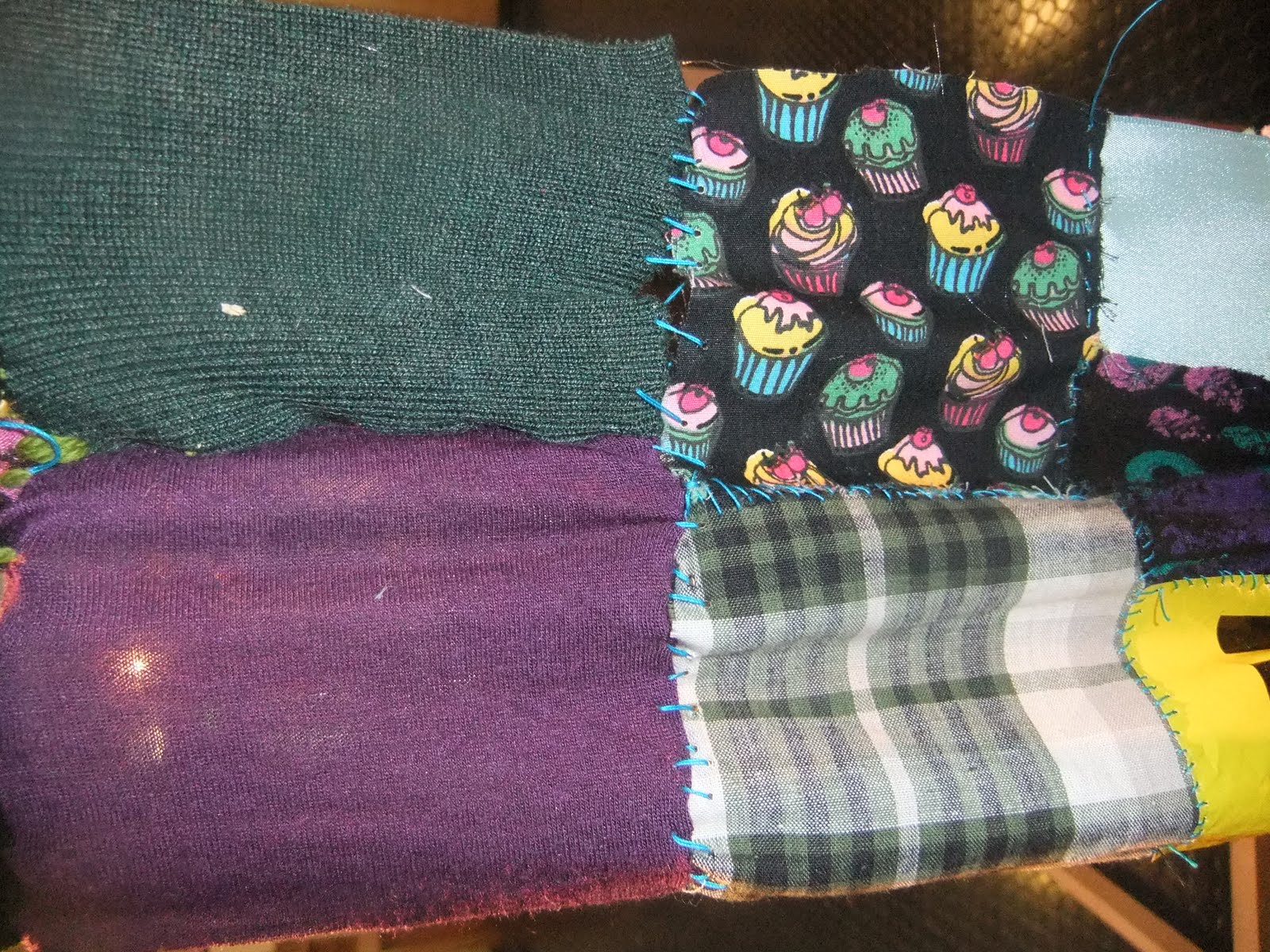
5 – secondary – patchwork of clothes – development of you as an individual and your interests and hobbies.

6 – university – weave of magazines and work – balance between work and life. Showing the impact the surrounding world has on your education and learning process

7 – life – bamboo strips tied together – these represent the final stage of learning is unending, we are always continuing to learn through our experiences. The bamboo is tied together at some points and spread apart at others to show how sometimes it feels like everything is coming together, others not at all.

When the viewer looks through the largest square the whole picture came together representing that our life is always a learning process and will always continue.

Friday, 29 October 2010

Dissertation Day

On Wednesday morning we had a nice little change from lectures and instead all the design studies students arrived in mono – Dundee Universities student night club. The morning after one of the biggest student nights out in Dundee I was expecting a pretty unpleasant smell and some empty glasses to be sitting about, but I was pleasantly surprised when I arrived to see a table full of cakes and tea and coffee instead! Alas, we were not there to party it up at 9am – instead it was a dissertation workshop day.


some of our group enjoying the sweet treats (jbaldwin twit pic/yfrog photo)

Over the past few weeks many of us have been thinking about and discussing our dissertation topics. On Tuesday our design studies group met up to discuss our latest ideas and topics. We each helped each other create and develop a mind map to prepare us for the dissertation work shop.

Yesterday was an opportunity to further develop our ideas and make the topic into a more specific question for investigation. We had to work together in our groups to investigate our research topic and broaden our thinking a bit. It was really good to be able to bounce ideas off each other and to be able to come up with some more specific questions that we may want to research and investigate. We had to think about what information we will need, sources we should start exploring and any experiments we may wish to undertake to get research.

At the minute the topic I am thinking of researching and developing into my dissertation is Exhibition Design. After yesterday I am currently thinking of looking into the impact Exhibitions have on the community and the culture of a place. With the V&A Exhibition Centre coming to Dundee I am particularly interested in this. I also attended a lecture to hear Dr Kylie Message talk about the way in which “new museums can shape public culture, reflect global economics and local politics, and play an increasingly important role in urban regeneration schemes.” I found this really interesting as to how museums and exhibitions have such a role in bringing the public and community together and making them and others more interested in their culture. Something that really struck me in her lecture was how she described exhibition centres and museums as being cult your all – culture for all.

My plan for the next few weeks and months is to try and see more and more exhibitons, museums and cultural places and see the impact these are having on the community to try and further my thinking into my topic. Watch this space for some of my thoughts, lots of photos and hopefully some conclusions.

http://vandaatdundee.com/your-future/your-say/

http://yfrog.com/mu46gij

http://www.thecourier.co.uk/News/Dundee/article/6338/dr-kylie-message-s-dundee-waterfront-v-and-a-project-advice.html

http://rsh.anu.edu.au/people/profile_system/public.php?id=53

Thursday, 28 October 2010

GIDE project

GIDE project.

We are entering into a group project and competition along with 7 partner schools in Belgium, Germany, Italy, Slovenia, Switzerland, Scotland and England. For this project we have been asked to design an exhibition based on one of four topics:

interiors & products & interaction

occupation

fabrication

domestectopias

We have been investigating the idea of exhibiton, installation and set design – looking into the differences between these, how the react with the public, impact the viewers, the age groups impacted.

We had to chose one of the four topics in which our group has chosen to look into Domestechtopias – something we weren’t very familiar with but have been letting the creative juices flow and they haven’t really stopped flowing. This idea of having a domestic utopia, perfection – what is this? The domestic home – where is home? How do we define a home? How do we make home a home? How or why or where do we feel at home? Is this a home or is it another place or space? These are just some of the questions we have been asking ourselves and others.

Many mind maps have been drawn in this process – some are shown below:


the beginning of the mind mapping....

mind mapping two different ideas...

the process helped to make us realise that the topic we had more inspiration and excitement for was...
Domestechtopias

At the minute we are looking into other exhibitions and installations for inspiration. One of my favourite so far is The Falling Garden shown below. I love this idea of the perfect, tranquil and in my opinion, euphoric space that one can interact with. The garden being a place of somebodies ideal space to spend time in.


the falling garden - gerda steiner & jorg lenzlinger


http://www.steinerlenzlinger.ch/eye_giardino.html

Wednesday, 27 October 2010

RSA project

This semester we have been given the brief for a design competition for the RSA. We are entering the Student Design Awards in which the purpose is;

“The RSA Student Design Awards scheme challenges professional designers-in-training to apply their skills to difficult social issues.

Since its birth as an industrial bursaries scheme in the 1920s, these awards have closely mirrored the evolution of professional design from single-discipline craftsmanship and narrowly-defined design for industry to more diffuse forms of service innovation and socially-inclusive professional practice.”

Our brief is “Modern age - How can the design of living spaces make growing old seem more attractive and inviting?”

After looking into the brief and investigating elderly living spaces I have decided to redesign the idea of a granny flat. These housing ideas seem to have disappeared or become less common over the past years and so I would like to reinvent them, make them more popular and appealing to both the family and the elderly person. The idea of being able to live close by the family, but remain independent is something I feel is very important to an elderly person. I have redesigned them to be something that the person can personalise to suit their wants and needs. The idea will start with a their needs or basic living space with the required eating, living, washing and sleeping spaces with the option to add on extra components for their wants for example a garden space, a sewing room, a baking room, a games room or extra bedrooms to have friends/grandchildren to stay.

The project is still in development stages but this is where I am so far:


Tuesday, 26 October 2010

v&a exhibition

I eventually got to the V&A exhibition last week. I decided to get a group of friends together from a few other courses as I was interested to hear their opinions and views on the different designs especially as they dont study any design related subjects but medicine and psychology. I reckon that because the V&A is being designed for the public it is very important that people other than designers are interested in it and have their vote.

I really loved getting to see all the different designs. I had viewed the images on the website but was interested in seeing full plans, presentations and models etc. I was curious as to whether my choice would change after seeing the full presentations. I found myself being very critical in the different presentations and chatting with the other girls about the designs made me realise how we each didn't really have massively different ideas on what was the most important part was - we all thought the external look was one of the most important aspects as we were all going to have to look at it. Secondly we all thought that the space that the public could interact with, hang out in/on and spend time with people in/at was an important aspect. Some of the architects obviously noticed this in their research for the project as they had external and internal seating spaces, restaurants and coffee shops.

I also realised that the designs had a lot more public and exhibition space that what I had thought. I suppose maybe i wasnt fully aware of what they purpose of the V&A was exactly for, but each architect has also interpreted this differently; some having theatres, restaurants, exhibitions, others focusing a lot more of the public space idea.

Needless to say, I still voted for the original image and design that I had chosen before seeing the whole exhibiton. The external image they created for the presentation really sold the idea and the full presentation only sold it even more in my opinion - 4 out of the 5 other girls also agreed!
I found this really interesting and wondering if my excitement for it made them change their ideas in anyway or if it was their own personal choice. I am excited to see if the rest of the public thought the same as me - from chatting to others who have went to view the exhibition a lot of others thought the same as me. I am excited to see the results!

and heres who I voted for -


rex design for the v&a dundee


Tuesday, 12 October 2010

design studies wiki assignment


Our first assignment for design studies this year was to create a wikipedia entry based on a chosen topic. We were put into groups with students from other design disciplines in DOJ. We then had to meet up to discuss the topics and chose one from a list that we were given. We each had to chose a different topic. After this initial meeting we went off to research our topics individually, we then met up again to further discuss our topics and help each other. Our group met up and created a big mind map. It was really good to meet with other students from other design fields and to get their views and opinions each others topics. I found it really good to open up your mind to thinking of my topic from a different perspective. The topic I chose was resource depletion and design. I have a keen interest in our environment, our resources and our use of these and how our designs can be effected by this in both a positive and negative way.


Our first assignment for design studies this year was to create a wikipedia entry based on a chosen topic. We were put into groups with students from other design disciplines in DOJ. We then had to meet up to discuss the topics and chose one from a list that we were given. We each had to chose a different topic. After this initial meeting we went off to research our topics individually, we then met up again to further discuss our topics and help each other. Our group met up and created a big mind map. It was really good to meet with other students from other design fields and to get their views and opinions each others topics. I found it really good to open up your mind to thinking of my topic from a different perspective. The topic I chose was resource depletion and design. I have a keen interest in our environment, our resources and our use of these and how our designs can be effected by this in both a positive and negative way.

Tuesday, 28 September 2010

dundee is going up in the world

tomorrow the opening of the proposals for the v&a dundee is happening tomorrow.
today images of the 6 different buildings was released. As interior design students we all got a little bit excited at this, sharing the links with each other over facebook and discussing which of our buildings was our favourites etc. I had heard that steven holl had designed one of the buildings and so was waiting in anticipation to see his idea. i have to admit, it wasnt my favourite. not at all actually. probably my least favourite if im very honest. ok that sounds a bit harsh. but i just found it very interesting how they have chose 6 very different designs and ideas. im very excited to see which one is actually picked and very happy that it is up to the public to decide. it is for us after all!

http://www.bbc.co.uk/news/uk-scotland-tayside-central-11421082

Steven Holl�s angular structure
steven holl's design for the v&a museum

glass palace by REX of New York
REX's design - possibly my favourite at the minute


I'm really looking forward to having a look at the plans, designs and models tomorrow - im sure there will be a blog about it too. My mind might change completely....

hello/goodbye september

September is a new beginning for many. people see January as a new start - for me personally Ithink im a september person. back to uni. back to the studio. back to the gym. back to work. back to rowing. back to a my tea addiciton. back to "life."

and... back to my blog.
its been a while.

well i tell a little bit of a lie. i have become very much addicted to blogging over the summer as I set up a new blog this summer - a travel blog. yup, many of you know, I jetted off to Canada this summer and kept many people amused with my goings on and adventures while i was away. I didn't really realise the power of my blog until I stepped off my plane in Glasgow with my friend Ross and was greeted by his granda who instantly said "oh I was reading your blog last night" this shocked me. a lot. it made me wonder who on earth has actually been reading my blog all summer and how many people probably know a lot more about me now than they did before. but there ya go, thats the power of social networking for you!! this was made even more obvious when I started to meet up with friends at uni who asked how my summer was, with a look on the faces that explained that they didn't really need an answer as they had been reading all about it/ new all about it anyway so didn't really need to be told. or when I speak to my friends about different things that happened while i was away, they ask questions about bits of the story I hadnt even told them!
I think this has given me even more motivation to get my design blog up and running more this year. I really want to get into the routine of keeping it up to date with things ive spotted and liked and found inspiring etc! so that is another of my missions for september (as it nears the end) , ive already got back to the gym, im starting back to work tonight and im suffering the blisters from being back to rowing for a few weeks. so heres to the blog.

p.s. my website is also on its way!

preparing myself for world wide web domination at this rate! il be stepping off the plane and have a complete randomer tell them they have been reading my blog next!


blog number 1.

28-9-10

the rucksack house.


would you let your granny live in this?
watch this space....